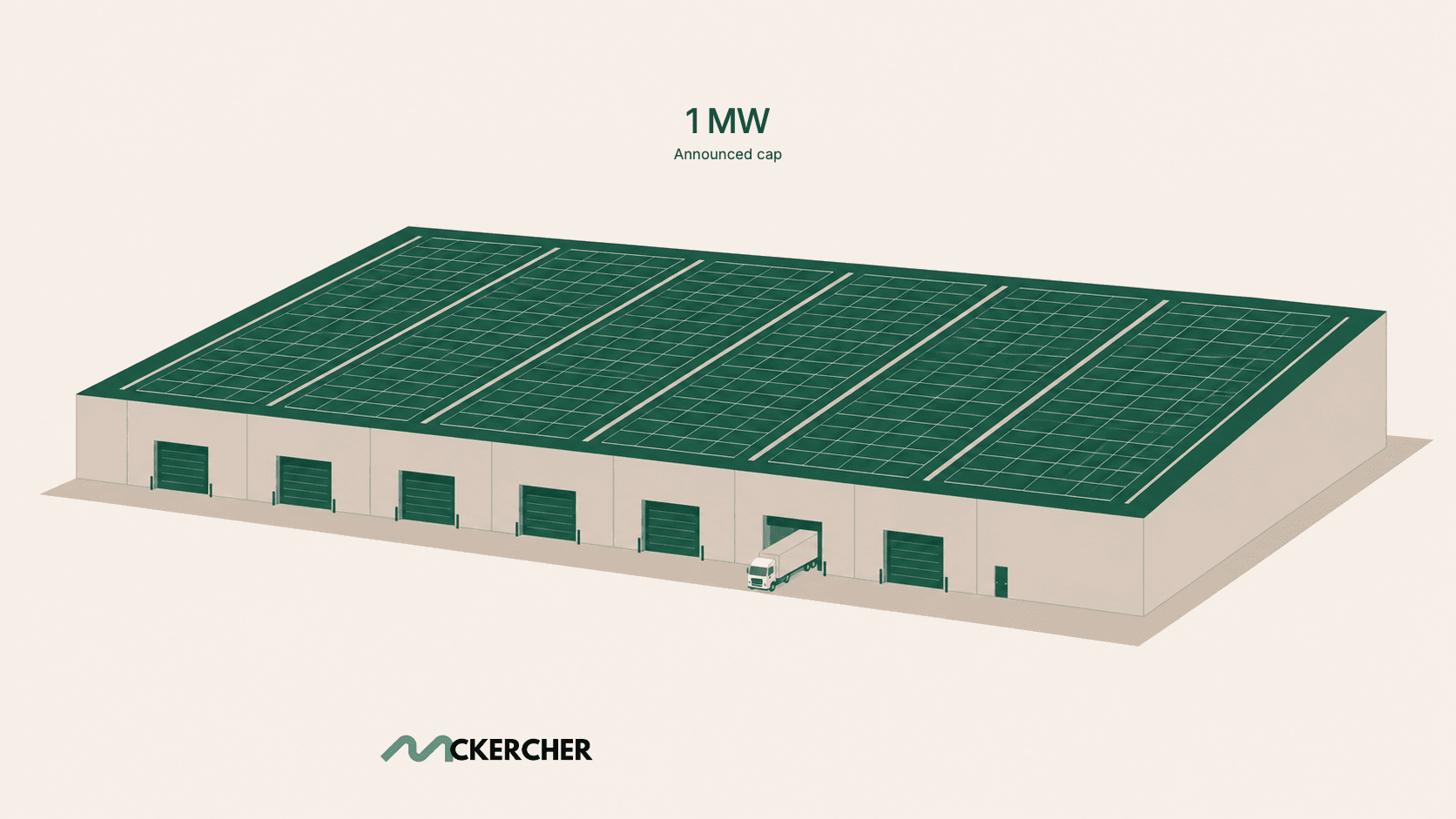
The Clean Energy Regulator confirmed on 17 September 2026 that the regulations expanding the Small-scale Renewable Energy Scheme to mid-scale solar have been made. The Renewable Energy (Electricity) Amendment (Mid-scale Solar) Regulations 2026 lift the maximum system size eligible for small-scale technology certificates from 100 kW to 1 MW, and apply to systems installed from 1 October 2026.
That closes the condition the announcement carried when the Minister for Climate Change and Energy first set it out on 5 August 2026, recorded at the time in Announced 1 MW Commercial Solar Rebate Cap. The scheme position stated there was that the expansion was announced rather than operative, and that no quote or certificate calculation should treat the 1 MW threshold as in force until the instrument existed. The instrument now exists.
Installation starts on 1 October, lodgement waits until November
Eligibility attaches to the installation. Certificate creation does not follow immediately. The Clean Energy Regulator expects applications for mid-scale systems to open in mid to late November 2026, once the systems and processes behind them are in place.
The practical effect is a gap of several weeks at the front of the scheme. A system installed in the first days of October is eligible, and it sits eligible and unlodged until the application pathway opens. Two things follow for anyone quoting in that window.
The first is contractual. A proposal that discounts the certificate value at the point of sale is carrying the movement in the certificate price between installation and creation. That exposure is ordinary in the small-scale market and is usually priced in, but the gap at the start of this scheme is longer than the gap on a household system, and the party bearing it should be named in the contract rather than assumed.
The second is scheduling. An installation brought forward into late September to suit a customer's own timetable falls outside the band entirely, because eligibility starts on 1 October. That is a harder line than a price difference, and it is worth stating plainly to any commercial customer weighing a September completion.
The deeming period holds at five years to 2030
For systems under 100 kW, the deeming period steps down each year as the scheme approaches its 2030 end, so the certificate volume attached to a given array falls with each year of delay. Mid-scale solar does not work that way. The certificate factor is based on a fixed five-year deeming period applied each year to 2030.
A 400 kW system installed in 2029 is therefore deemed on the same five-year basis as a 400 kW system installed in 2026. This was the point the Minister's briefing flagged in August as commercially significant, and it is the one that most changes how a multi-year commercial pipeline should be planned. The timing pressure that shapes household sales does not apply in the same way to a mid-scale commercial project.
A system takes small-scale certificates or it takes the other pathway
A participant elects between the Small-scale Renewable Energy Scheme and the Renewable Electricity Guarantee of Origin scheme before applying. Electing small-scale certificates may preclude creating large-scale generation certificates or Guarantee of Origin certificates over the deeming period.
That election belongs in the commercial conversation at proposal stage rather than at lodgement. A customer with a corporate reporting requirement attached to renewable electricity certification, or with an existing arrangement that depends on large-scale certificates, has a decision to make that an upfront certificate discount does not settle on its own.
Existing eligibility requirements and processes under the scheme continue to apply, and the arrangements for systems smaller than 100 kW are unchanged.
Western Power connection is still the constraint in Western Australia
Cost was one of two constraints on mid-scale commercial solar. The regulation addresses that one. The other is network connection, and in the South West Interconnected System it is the constraint that binds.
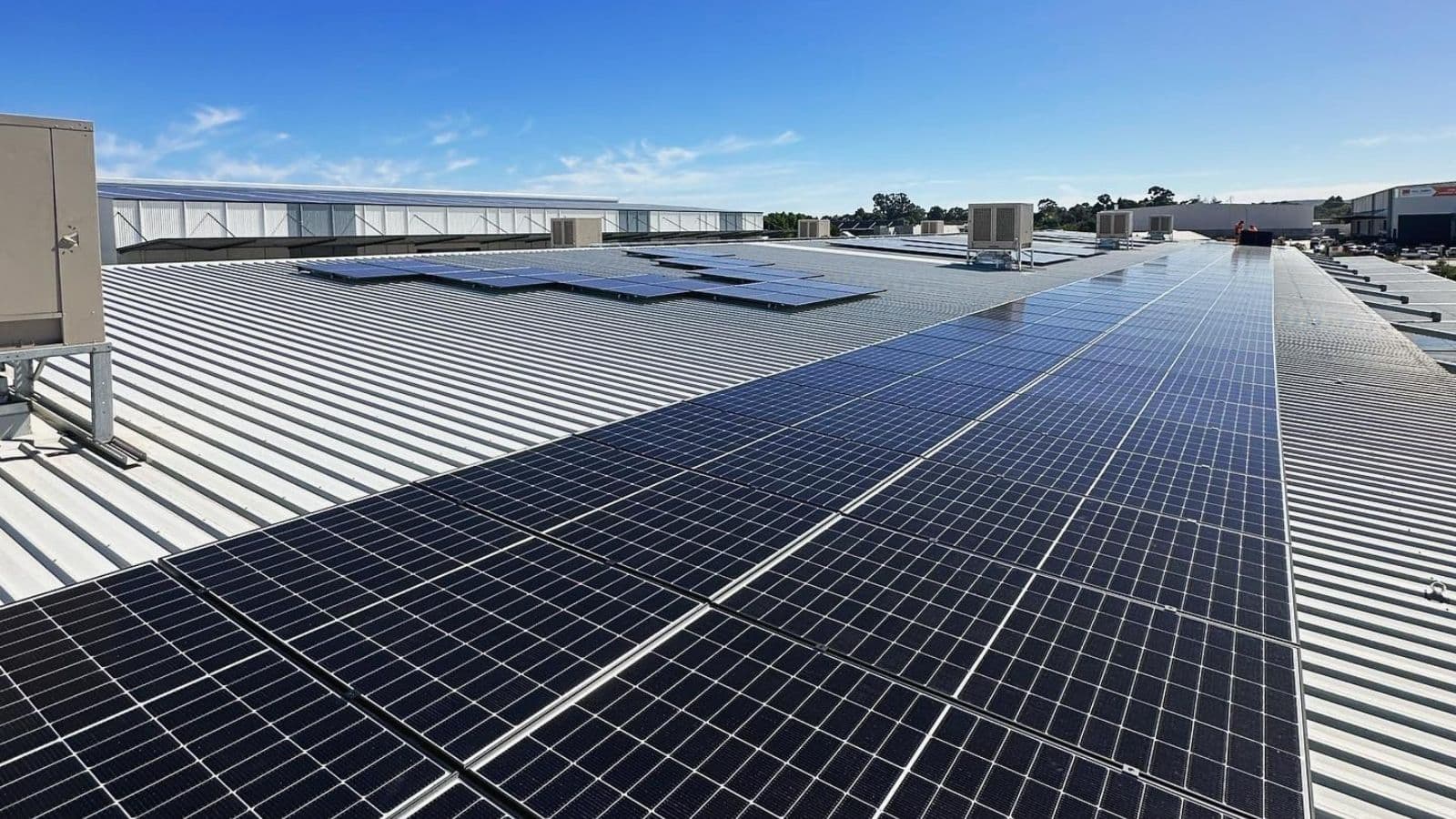
A commercial rooftop system in the 100 kW to 1 MW band on the SWIS requires network approval from Western Power, and that assessment determines whether the system can export, at what limit, and on what timeframe. A federal certificate scheme does not alter it. A site whose connection application constrains export to a fraction of its array is not made viable by a cheaper array, and the certificate expansion does not change the order in which those two questions have to be answered.
The connection half of the question sits with Energy Policy WA, and the record of that work is in WA Government Opens Consultation on Solar, Battery and EV Charger Connections. The maintained commercial solar and network connection guide sets out the load, connection and evidence checks that should precede a proposal in this band.
Describing this to a customer
The threshold is law. A commercial customer can now be told that systems above 100 kW and up to 1 MW installed from 1 October 2026 are eligible for small-scale technology certificates, without the conditional framing that applied through August and early September.
What remains conditional is the timing of certificate creation and the detail the Regulator has yet to publish. A proposal in this band should state the 1 October eligibility date, note that certificate applications are expected to open in mid to late November, name who carries the certificate price between those points, and keep the system's network connection outcome as a separate condition in its own right.
Current-status note
This article was reviewed on 21 September 2026. The application opening date, the treatment of related devices, extensions and upgrades, and the documentation requirements were not settled when the article was reviewed. Before designing, quoting or contracting a system above 100 kW, confirm the current scheme guidance with the Clean Energy Regulator (opens in a new tab) and obtain the applicable network connection advice. Related controlled context is available in the WA solar and battery compliance centre and the editorial standards.
Sources: Clean Energy Regulator, Mid-scale solar now legislated, 17 September 2026 (opens in a new tab); Clean Energy Regulator, Mid-scale solar (opens in a new tab); Department of Climate Change, Energy, the Environment and Water, Renewable Energy Target scheme (opens in a new tab); Clean Energy Regulator, Expansion of solar photovoltaic (PV) eligibility under the Small-scale Renewable Energy Scheme, August 2026 (opens in a new tab).