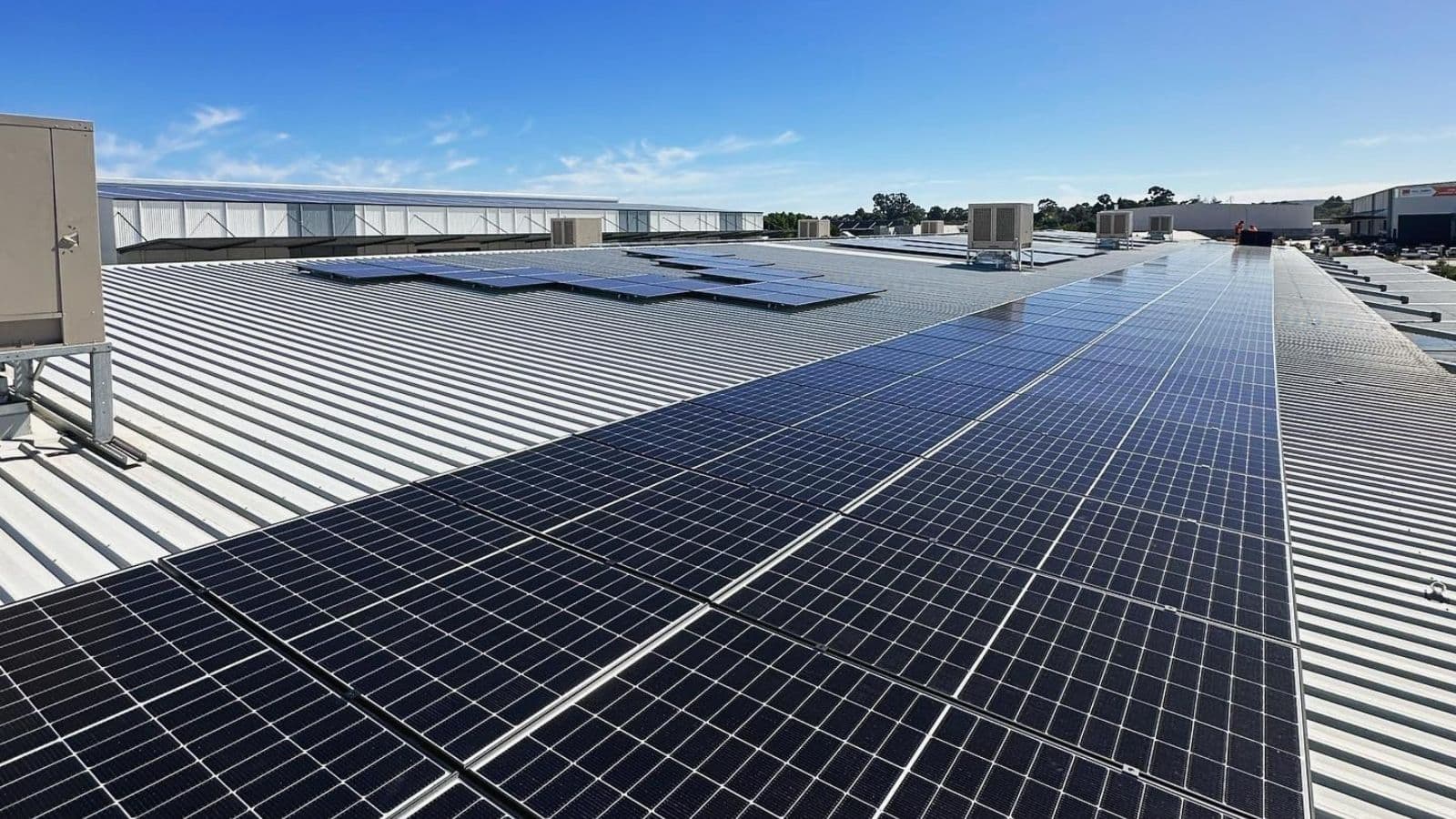
The Department of Energy and Economic Diversification has published draft changes to the Wholesale Electricity Market rules that would make it easier for small batteries on the distribution network to sell network support to Western Power. The department released the final outcomes of its review of the Non-Co-optimised Essential System Services framework, together with an exposure draft of the amending rules, on 30 September 2026. Written comments are due by 5:00pm on Thursday 29 October 2026.
NCESS is the framework AEMO and Western Power use to contract services the market does not already supply, such as system strength, or support for a stretch of network at risk of falling short of its reliability standard. Network support services are the part Western Power buys, and they were the subject of the review's second stage.
Two payments from one battery
Under clause 5.3.1(b) of the current rules, a facility that holds a network support contract with Western Power and also holds Capacity Credits for the same period cannot keep both payments in full. AEMO gives Western Power the value of the expected Capacity Credit payments, and Western Power reduces the contract payment by that amount.
The draft inserts a new clause 5.3.3 that switches that offset off for a defined group of facilities. To qualify, a facility must:
- be connected to the distribution system;
- be an Electric Storage Resource, which in practice means a battery;
- have an aggregated capacity of 5 MW or less, with no more than 1.2 MW behind any single connection point; and
- hold a network support contract with Western Power entered into between 1 January 2026 and 31 December 2028.
The department calls the result value-stacking. Its stated aim is to give providers enough return to enter a network support market it describes as in its infancy, and it names operators of small-scale community batteries as the providers most likely to use it. The exemption attaches to the date a contract is signed, not to when a procurement starts or when the contract ends.
- 1Contracts eligible for the value-stacking exemption1 Jan 2026 to 31 Dec 2028
The exemption window is the contract-signing period in draft clause 5.3.3. The exemption has no effect until the amending rules are made. The window reaches back to contracts signed from 1 January 2026.
Data table
| Event | From | To | Precision |
|---|---|---|---|
| Contracts eligible for the value-stacking exemption | 1 Jan 2026 | 31 Dec 2028 | Exact |
| Stage one trigger changes gazetted | 23 Dec 2025 | Point in time | Exact |
| Consultation paper published | 10 Feb 2026 | Point in time | Exact |
| Consultation closes | 10 Mar 2026 | Point in time | Exact |
| Information paper and exposure draft | 30 Sept 2026 | Point in time | Exact |
| Exposure draft comments close | 29 Oct 2026 | Point in time | Exact |
Batteries only, for three years
The exemption is narrower than the February proposal. The consultation paper would have admitted other technologies at up to 0.6 MW per connection point. The final outcome confines it to network-connected batteries, and the department says the refinement also keeps demand side programme aggregations out. Its reasoning is that the Reserve Capacity Price already covers the low fixed costs of those aggregations, so adding an availability payment under a network support contract would pay them twice for the same capacity.
| Record | February consultation paper | September exposure draft |
|---|---|---|
| Batteries on the distribution network | ●Up to 1.2 MW per connection point | ●Up to 1.2 MW per connection point |
| Other technologies | ●Up to 0.6 MW per connection point | ×Removed |
| Aggregated facility size | ●5 MW or less | ●5 MW or less |
| Contract signed | ●1 Jan 2026 to 31 Dec 2028 | ●1 Jan 2026 to 31 Dec 2028 |
February terms as restated in Appendix A of the information paper. The September terms are those in draft clause 5.3.3.
Data table
| Record | February consultation paper | September exposure draft |
|---|---|---|
| Batteries on the distribution network | Up to 1.2 MW per connection point (confirmed) | Up to 1.2 MW per connection point (confirmed) |
| Other technologies | Up to 0.6 MW per connection point (confirmed) | Removed (not applicable) |
| Aggregated facility size | 5 MW or less (confirmed) | 5 MW or less (confirmed) |
| Contract signed | 1 Jan 2026 to 31 Dec 2028 (confirmed) | 1 Jan 2026 to 31 Dec 2028 (confirmed) |
Western Power asked for five years, to 31 December 2030, citing development, contracting and connection lead times. The department kept three. It said the exemption could be extended, in the same or a modified form, if analysis at the end of the period shows support is still needed. The WA Expert Consumer Panel supported value-stacking but asked that the combined payment be capped at the avoided cost of generation capacity plus the avoided cost of network augmentation.
Homes stay with Synergy
The draft opens no new route for household batteries. Its explanatory note distinguishes residential DSP and DER aggregations, which it describes as non-contestable and Synergy-only, from the larger aggregations the exemption is written for. Households in the South West Interconnected System take part in aggregation through Synergy, the subject of the Pulse report on Synergy's aggregator panel.
The 1.2 MW connection-point limit puts commercial and community batteries in range. For a business with a battery behind its meter, the exemption matters only if that battery forms part of a facility holding a Western Power network support contract.
Faster repeat tenders
The second change is procedural. Western Power has run several network support procurements and, according to the department, now has a stable template for the service specification, with only minor parameters changing between rounds. Each round still requires a trigger submission to the Coordinator of Energy and an expression of interest stage.
Under a new section 3.11C, the Coordinator could approve a Standard NCESS Service Specification. Western Power could then reuse it for the same service in another location without a fresh trigger submission, and go directly to a request for submissions. A change to the service requirements, the expected technical capability, the material contract terms or the selection criteria would count as a material amendment and need the Coordinator's approval again. The department took that list from Synergy's submission. Each tender stays open to every provider capable of the service, not only those who took part in earlier rounds.
Islanded backup for regional towns
The third change covers backup supply for regional towns on long rural feeders, where outages last longer because lines are exposed and hard to reach. A facility of 5 MW or less that supplies network support only while its section of the distribution network is islanded from the wider system would not need to register as a Market Participant or take part in the Reserve Capacity Mechanism. The department notes these services are often provided by diesel generators, and that their operators might otherwise stay out of a tender rather than take on market registration.
Battery capacity rules, published the same day
The department also published the information paper for its review of Capability Class 2 technologies, the Reserve Capacity Mechanism rules for batteries and demand side programmes. Its outcomes include three changes that bear directly on batteries:
- AEMO would measure the total energy a battery delivers in a Reserve Capacity Test, including ramping, so that a battery need not be oversized only to pass the test.
- Demand side programme availability windows would move to 8:00am to 12:00pm and 2:00pm to 10:00pm on business days. The department says this is meant to encourage behind-the-meter storage into those aggregations.
- A new Lack of Reserve, State of Charge condition would let AEMO require batteries with peak capacity obligations to hold a uniform charge level ahead of an evening peak, declared no later than 8:00am on the day.
Those outcomes are not yet drafted. The department will publish a separate exposure draft for consultation and has not given a date. The price side of the same mechanism is also under review: the Pulse covered the proposed gas turbine benchmark for capacity prices in September.
Making a submission
Four submissions were made on the February paper, from Synergy, Western Power, the WA Expert Consumer Panel and Sumitomo SHI FW Energia Oy. All four supported the three proposals.
References
- Department of Energy and Economic Diversification, The Non-Co-optimised Essential System Services Framework (opens in a new tab)
- Department of Energy and Economic Diversification, NCESS Framework Review Information Paper, September 2026 (opens in a new tab)
- Department of Energy and Economic Diversification, NCESS Framework Review Exposure Draft, September 2026 (opens in a new tab)
- Department of Energy and Economic Diversification, Capability Class 2 Technologies Review (opens in a new tab)
- Department of Energy and Economic Diversification, Capability Class 2 Technologies Review Information Paper, September 2026 (opens in a new tab)